
Digital Transformation: Why You Should Start with Knowledge, Not Sensors
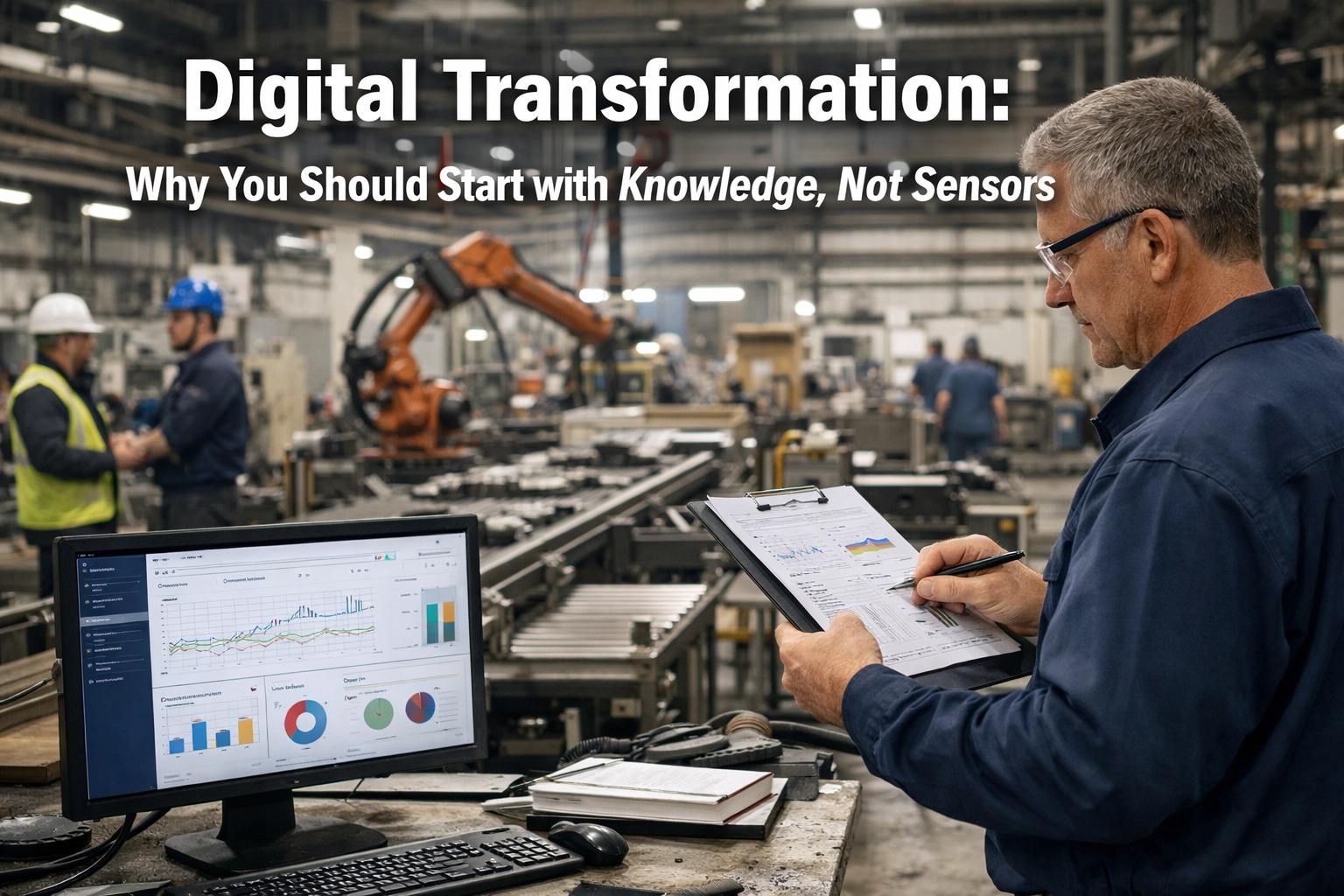
Walk onto any factory floor in the UK right now and ask about "Digital Transformation." You'll likely get a heavy sigh, a roll of the eyes, or a long story about a three-year IoT project that's still "in the pilot phase."
For years, we've been told that the only way to modernise a plant is to glue sensors to every motor, wire up every conveyor, and wait for a "Smart Factory" to emerge from the data. It sounds great in a boardroom PowerPoint. On the shop floor? It's a nightmare of cabling, integration headaches, and massive upfront costs.
But here's the reality: Most manufacturers don't have a data problem. They have a knowledge problem.
While you're waiting for sensors to tell you a bearing is running hot, your senior engineers are walking out the door for retirement, taking thirty years of "tribal knowledge" with them. Your SOPs are buried in 400-page PDFs that no one reads. Your maintenance logs are a mess of cryptic shorthand.
If you want to transform your plant, don't start with hardware. Start with the knowledge you already have.
The Problem: We're Drowning in Data but Starving for Answers
The "Sensor-First" approach assumes that if you collect enough data, the answers will magically appear. But data without context is just noise.
Think about the last time a critical machine went down at 2:00 AM on a Sunday. Your best engineer is at home, asleep. The junior on shift is staring at a control panel flashing a "Fault Code 402." They know the answer is somewhere in the technical manual, but that manual is a dusty, 500-page binder in the foreman's office. Or worse, it's a digital PDF on a shared drive that takes ten minutes just to search.
Does that engineer need a vibration sensor? No. They need to know what "Fault Code 402" means for this specific machine and which tool they need to grab to fix it.

Why Technology-First Approaches Often Fall Short
When organisations treat digital transformation as a technology implementation challenge, they create fragmented systems. You end up with a shiny new dashboard that tells you a machine is down, but it doesn't tell you how to get it back up.
The missing link is intentional knowledge architecture. Instead of deploying sensors first, smart plants are looking at how to decompose their existing knowledge — equipment configurations, troubleshooting procedures, and error codes — into usable chunks that an AI can understand and serve up in seconds.
At Machine Mesh, we see it every day. Companies spend six figures on "Predictive Maintenance" software only to find out their team still can't find the correct torque settings for a bolt change.
The Real Crisis: The Industrial "Brain Drain"
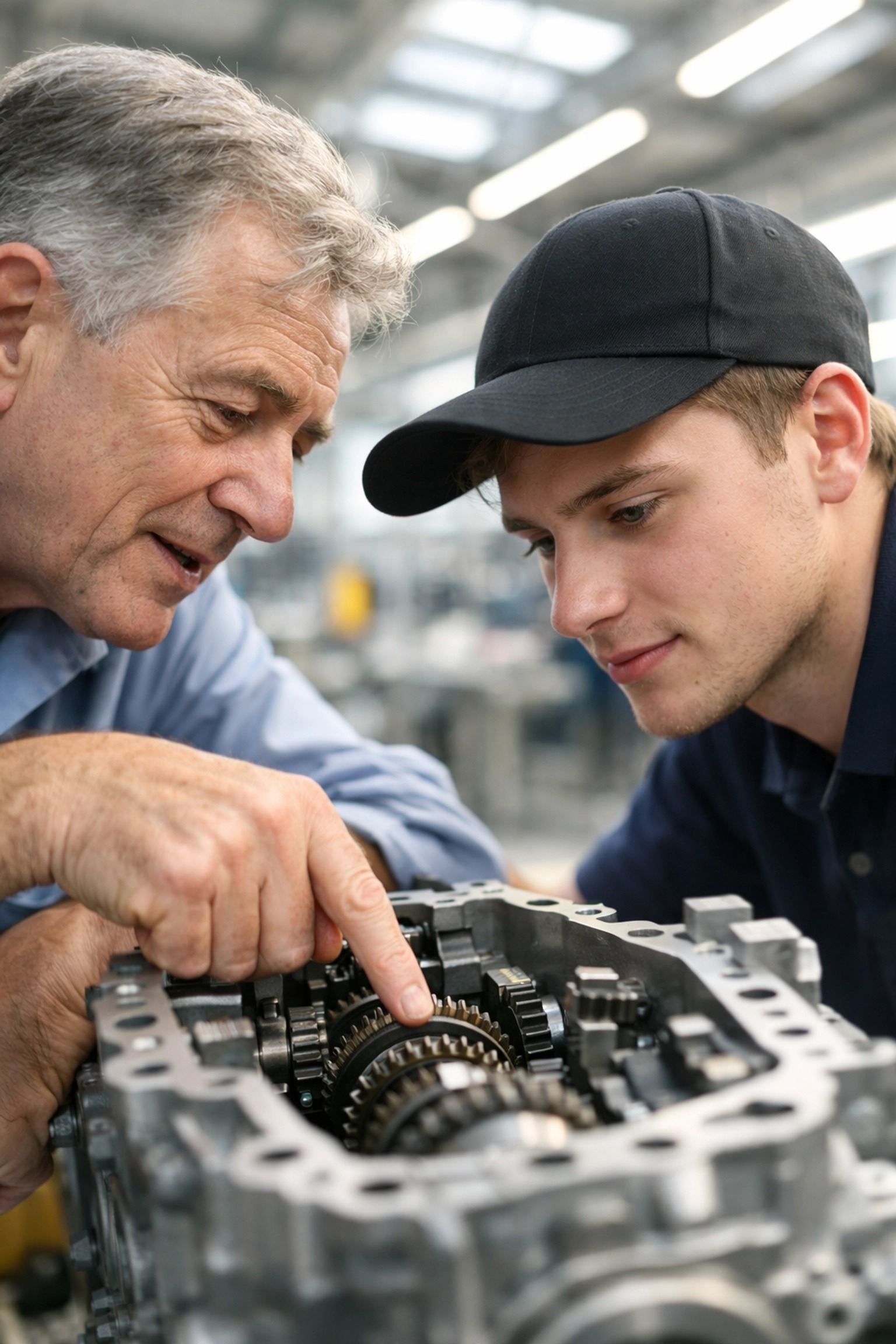
The UK manufacturing sector is facing a massive demographic shift. Your most experienced engineers — the ones who can diagnose a fault just by the sound of the motor — are retiring. When they leave, that knowledge doesn't stay in your company. It goes to the golf course.
This "tribal knowledge" is your most valuable asset. It's the "little tricks" that aren't in the official SOPs but keep the line running.
Digital transformation should be about capturing that expertise and making it accessible to the next generation. If you don't digitise that knowledge now, no amount of sensors will save you when your senior team is gone.
Knowledge-First: The Fast Track to ROI
The beauty of starting with knowledge is that it's low-risk and high-impact. You don't need to shut down a line to install cables. You don't need to wait for a hardware shipment from overseas.
You already have the raw material:
- PDF manuals from the OEM
- Standard Operating Procedures (SOPs)
- Maintenance logs and historical repair data
- Internal safety guides
By using an industrial AI assistant, you can turn these static documents into an interactive "Copilot" for your maintenance team.
How Machine Mesh Changes the Game
We built Machine Mesh to solve this specific problem. We don't want you to wait twelve months for a "Digital Twin." We want you to see results in hours.
Our platform acts as a bridge between your messy documentation and your maintenance team. Here's how:
- Ingest Knowledge — You upload your existing PDFs, manuals, and SOPs.
- Index Context — Our AI doesn't just "read" the words; it understands the context of your specific machinery.
- Generate Answers — When an engineer asks a question, the AI provides a clear, concise instruction.
- Cite Sources — Every answer comes with a link to the exact page in the manual it came from.
Transparency is the foundation of trust. Your engineers won't trust a tool that just "tells" them what to do. They will trust a tool that points them to the official documentation instantly.
The 2:00 AM Scenario: A Real-World Comparison
Plant A (Sensor-First)
The sensor triggers an alert. The Plant Manager gets an email. The junior engineer sees the alarm but doesn't know the fix. They spend 45 minutes looking for the manual, another 20 minutes finding the right section, and realise they don't have the right spare part in stock. Downtime: 4 hours.
Plant B (Machine Mesh / Knowledge-First)
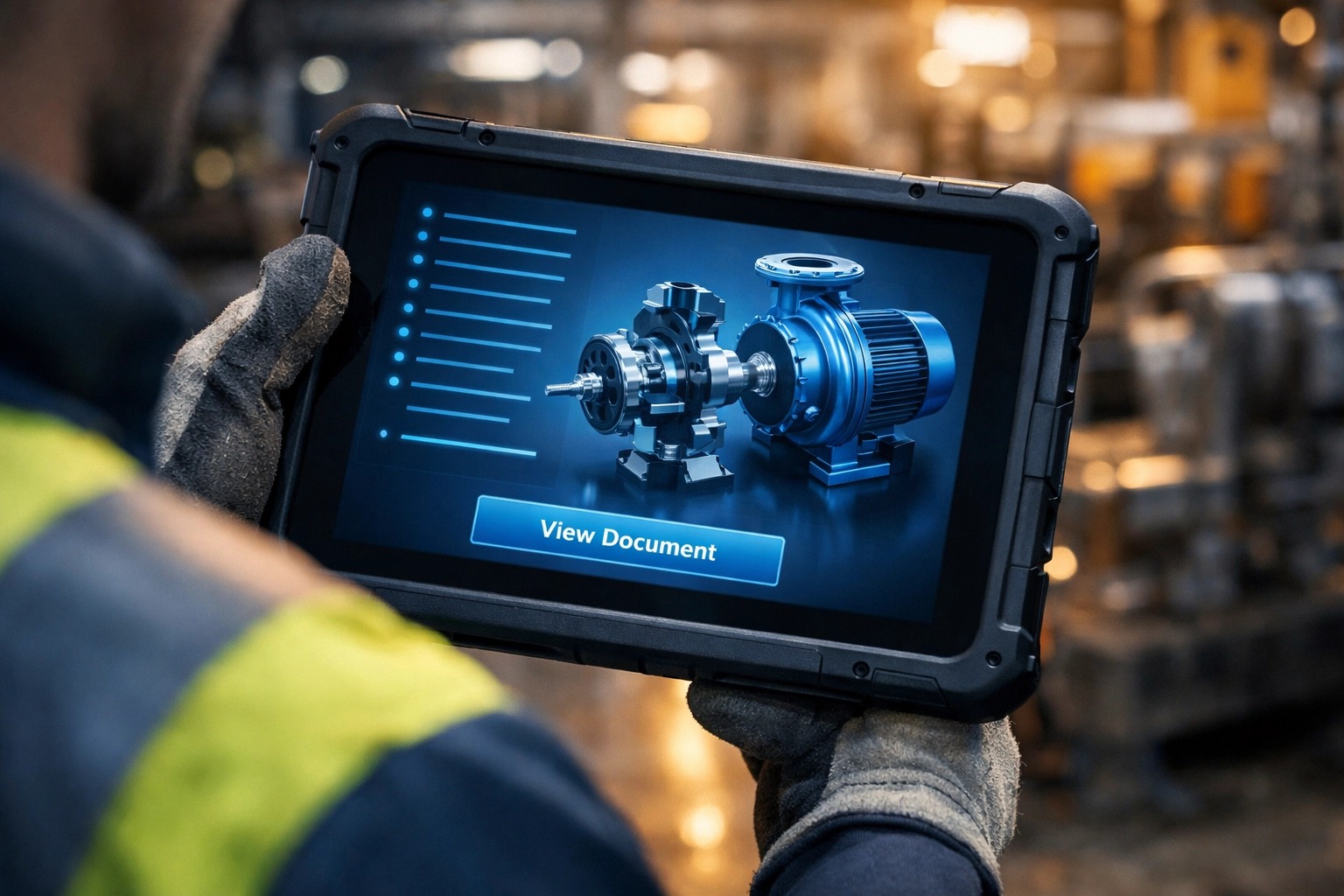
The alarm triggers. The junior engineer pulls out a tablet and types: "How do I clear Fault Code 402 on Line 3?"
Machine Mesh replies: "Fault 402 indicates a pressure sensor misalignment. Step 1: Check the valve on the rear manifold. Step 2: Use a 10mm wrench to adjust the set screw. See Page 42 of the Maintenance Manual for the diagram." Downtime: 20 minutes.
Which plant is actually "transformed"?
Low Risk, Fast Setup: The Pilot Programme
Most UK plant managers are (rightly) sceptical of big software promises. That's why we advocate for a low-risk pilot.
We don't ask for a site-wide overhaul. We suggest starting with one site, or even one specific line. We can have your documentation ingested and your AI assistant ready to test in a matter of hours, not months.
It's about proving value quickly. Once your engineers see that they can get answers in seconds rather than digging through folders, the cultural shift toward digital happens naturally. You aren't forcing a new tool on them; you're giving them a tool that makes their lives easier.
FAQs: What Engineers Usually Ask Us
"Is this just ChatGPT for factories?"
Not exactly. While it uses similar logic, it's a closed system. It only uses your data and your manuals. It won't give you generic advice from the internet; it gives you the specific instructions for your exact equipment.
"Does it work with hand-written logs?"
We're getting there. Currently, we thrive on digital text (PDFs, Word docs, spreadsheets). If your logs are scanned into PDFs, our OCR can handle the heavy lifting.
"Is our data secure?"
Absolutely. Your proprietary knowledge is your competitive advantage. It stays within your secure environment.
The Bottom Line: Start Where You Are
Digital transformation doesn't have to be a multi-million-pound gamble on hardware. It can be as simple as making sure your team has the information they need to do their jobs effectively.
By starting with knowledge, you:
- Protect yourself against the "Brain Drain"
- Reduce downtime instantly
- Empower your junior staff
- Build a foundation for future IoT and sensor projects
Sensors are great for telling you when something is wrong. But knowledge is the only thing that tells you how to fix it.

Ready to see it in action?
No massive sales pitch. No 60-slide decks. Just a 10-minute look at how Machine Mesh can turn your dusty manuals into a 24/7 expert assistant.
Start a 30-day free trial →