
Your Quick-Start Guide to AI on the Factory Floor: Why You Should Pilot One Site First

It's 2:00 AM on a Sunday. The main production line at your Midlands plant has just ground to a halt. The night shift lead is staring at a fault code on the HMI that nobody recognises.
He checks the physical manual. It's missing three pages and the spine is held together by electrical tape. He checks the shared drive on the office PC. There are four versions of the SOP, and the most recent one is dated 2018. The one guy who actually knows how to fix this specific sensor retired last June, taking thirty years of "tribal knowledge" with him to a golf course in Portugal.
Every minute the line is down, you're losing thousands. You've heard about AI and how it's supposed to "revolutionise manufacturing," but you don't have two years or a multi-million-pound budget to overhaul your entire IT infrastructure. You need an answer right now.
Does this sound familiar?
At Machine Mesh, we talk to UK plant managers and maintenance engineers every day who are caught in this exact trap. They want the efficiency of modern tech, but they can't afford the risk of a massive, failed digital transformation project.
The solution isn't a global rollout. It's starting small.
The Problem with "Big Tech" Industrial Solutions
Most industrial software companies want to sell you a "platform." They want to connect every sensor, every PLC, and every ERP system across your entire global footprint. They promise "predictive maintenance" and "digital twins," but only after an eighteen-month implementation phase and a massive overhaul of your legacy hardware.
In the real world, you don't have eighteen months. You have a deadline on Friday.
When you try to go "big" from day one, you run into three walls:
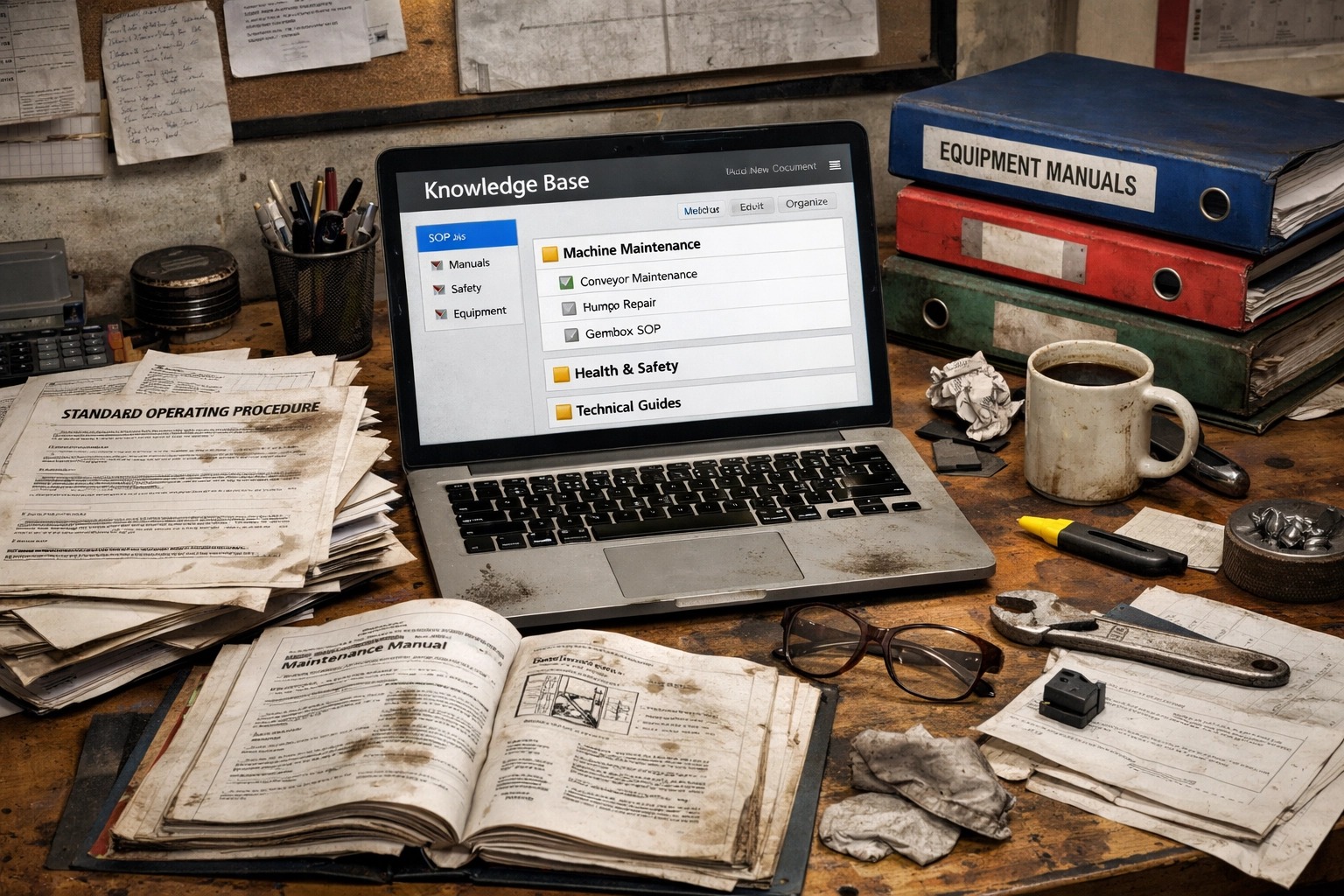
- The Data Wall: Your documentation is messy. It's in PDFs, Word docs, scanned hand-written notes, and half-finished Excel sheets.
- The IT Wall: Your internal IT team is already buried. They don't have the bandwidth to build custom API integrations for thirty-year-old machines.
- The Trust Wall: Your engineers don't trust "black box" AI. If an AI tells them to strip a gearbox, they want to know why and where that instruction came from.
Why a Single-Site Pilot is Your Secret Weapon
The most successful AI implementations in UK manufacturing don't start at the corporate headquarters. They start on one line, in one plant.
By running a pilot on a single site, you eliminate the "fear of the unknown." You aren't betting the entire company's future; you're solving a specific problem for a specific team. Here is why the single-site approach is the only way to go:
01. Zero Risk, Maximum Speed
A pilot allows you to prove the value before you sign off on a massive CAPEX budget. With Machine Mesh, we aren't talking about months of setup. We're talking about hours. We take your existing, "messy" documentation as it is — warts and all — and turn it into a searchable, intelligent knowledge base.
02. No IT Overhaul Required
You don't need to replace your PLCs. You don't need to install thousands of new vibration sensors. A single-site pilot focuses on the Knowledge Layer — the information that already exists in your manuals, SOPs, and maintenance logs.
03. Immediate Feedback from the Shop Floor
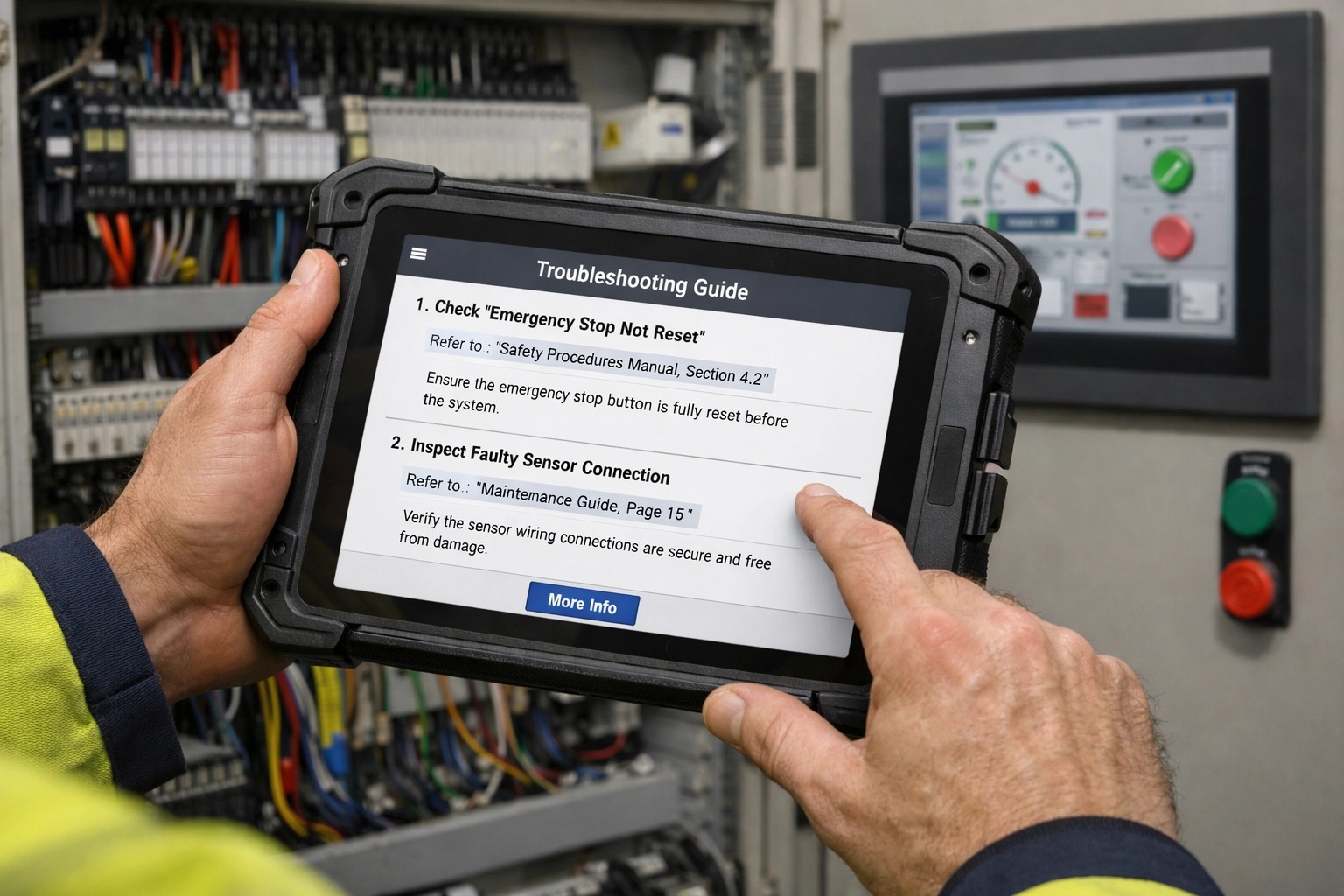
The people who will actually use this are your maintenance engineers and operators. A pilot gives them a seat at the table. When they see they can type a fault code into a tablet and get a cited, accurate answer in five seconds, the "AI is going to take my job" fear disappears. It becomes a tool, like a high-end multimeter or a torque wrench.
From "Messy PDF" to Expert Answers in Hours
How does this actually look in practice? Most managers assume they need to "clean" their data before AI can touch it. They think they need to hire interns to re-type manuals into a database.
You don't.
Machine Mesh is designed to handle the reality of the British factory floor. We take your:
- Original OEM manuals (even the 500-page ones)
- Internal SOPs and "Cheat Sheets"
- Safety protocols and RAMS
- Historic maintenance logs
Our system ingests this data, indexes the technical context, and generates answers based only on your specific documents.
The "Anti-Hallucination" Factor: Why Citations are Non-Negotiable
We've all played with generic AI that sometimes makes things up. In a manufacturing environment, a "hallucination" isn't just a funny mistake — it's a safety hazard. If an AI tells an engineer to bypass a safety interlock because it "guessed" the answer, that's a catastrophic failure.
This is where Machine Mesh differs from generic AI tools. Every single answer our system provides comes with citations.
When an engineer asks, "How do I recalibrate the tensioner on Line 4?", Machine Mesh doesn't just give the steps. It shows the exact page of the OEM manual it pulled that information from. It links to the specific SOP.
It provides:
- Verifiable Answers: No guesswork.
- Source Transparency: The engineer can click the citation to see the original document.
- Accountability: You know exactly where the knowledge originated.
A Day in the Life: With vs. Without Machine Mesh
Let's look at a common scenario: a Root Cause Analysis (RCA) meeting.
Without Machine Mesh: A team of four high-paid engineers sits in a conference room for three hours. They're arguing about whether the bearing failed because of lubrication or alignment. They spend half the meeting looking for the maintenance history in a filing cabinet. They leave with a "best guess" and a plan to check again tomorrow.
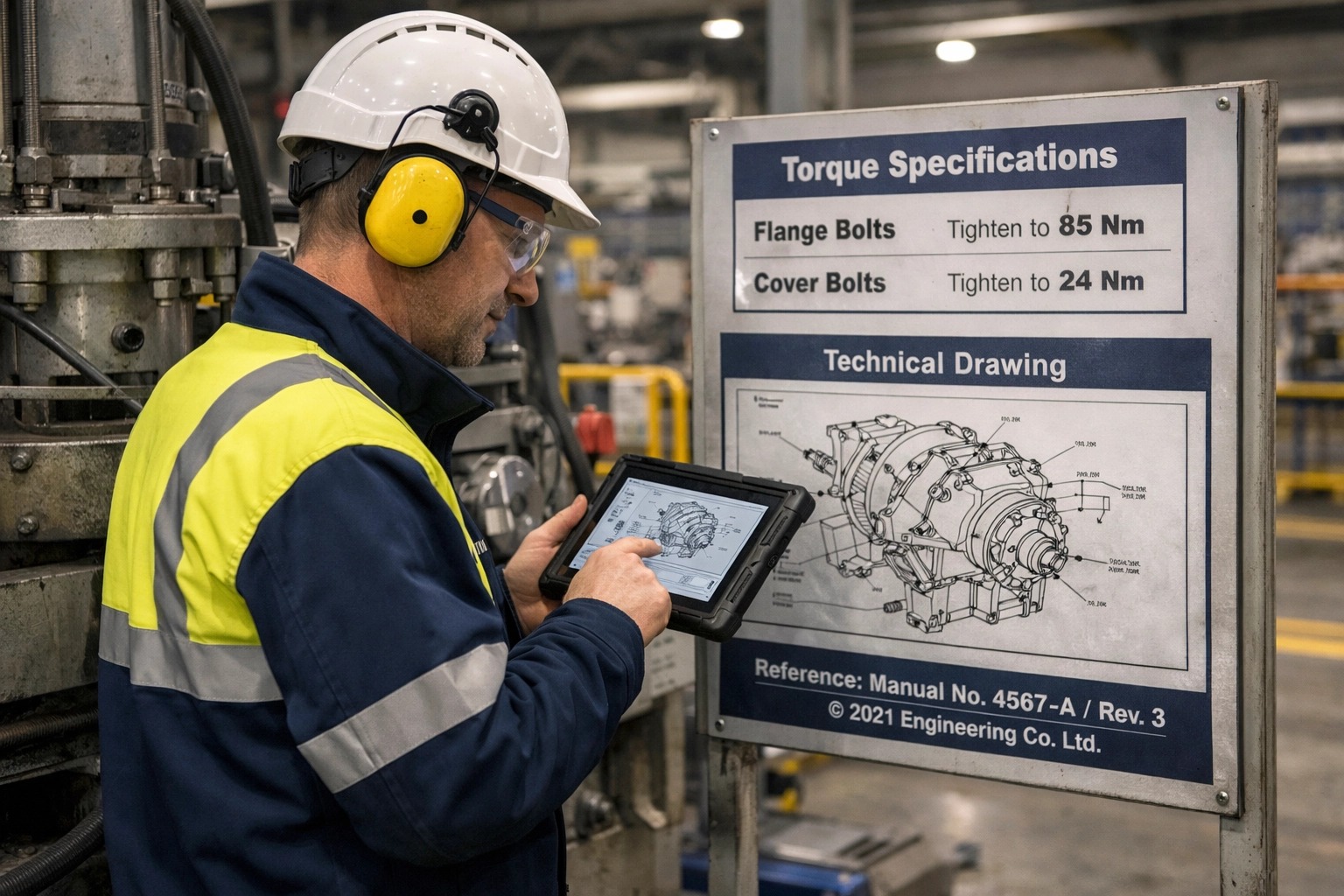
With Machine Mesh: The team brings a tablet to the machine. They ask the AI: "Show me all instances of bearing failure on this unit over the last 12 months." Within seconds, they have a summary of every log entry, cited and dated. They ask: "What is the recommended torque spec for the housing bolts?" The AI pulls the exact figure from the technical drawing. The meeting takes 15 minutes. The fix is accurate. Production resumes.
How to Start Your Pilot (It's Simpler Than You Think)
If you're a Plant Manager or a Maintenance Lead in the UK, you don't need a digital transformation consultant. You need a way to make your team's life easier.
Here is our "No-Nonsense" 3-step guide to starting:
- 1. Pick One Problem Area: Don't try to solve the whole plant. Pick the one machine or line that causes the most headaches or has the most complex documentation.
- 2. Gather Your "Messy" Docs: Don't worry about formatting. Give us the PDFs, the Word docs, and the spreadsheets you already use.
- 3. Run the Pilot: We set up your private instance of Machine Mesh. Your team starts asking questions. You see the ROI in days, not years.
Q&A: Common Concerns from the Floor
"Is our data secure?" Yes. Your data is yours. It isn't used to train public models. It stays within your secure environment, accessible only by your team.
"Does it work with hand-written notes?" As long as they are scanned and semi-legible, our OCR (Optical Character Recognition) can often pull the relevant context. Even "messy" data is better than "no data."
"What if the manual is wrong?" The AI is only as good as the information you give it. However, because we use citations, your engineers will immediately see if the source document is outdated. This actually helps you identify which parts of your documentation need an update.
The Bottom Line
The gap between "knowing what to do" and "doing it" is where your profit disappears. In the UK manufacturing sector, we have some of the best engineering minds in the world, but we waste their time making them act like librarians — searching for info in outdated manuals.
Machine Mesh ends the search. We give your team the answers they need, cited and verified, so they can get back to what they do best: keeping the wheels turning.
Stop overthinking the "Grand AI Strategy." Start with one site. Start with Machine Mesh.
No sales pitch. No 50-page slide deck. Just a 10-minute look at how we can turn your messy manuals into your plant's greatest asset.